
The Impact of the War in Ukraine on the Indian Economy
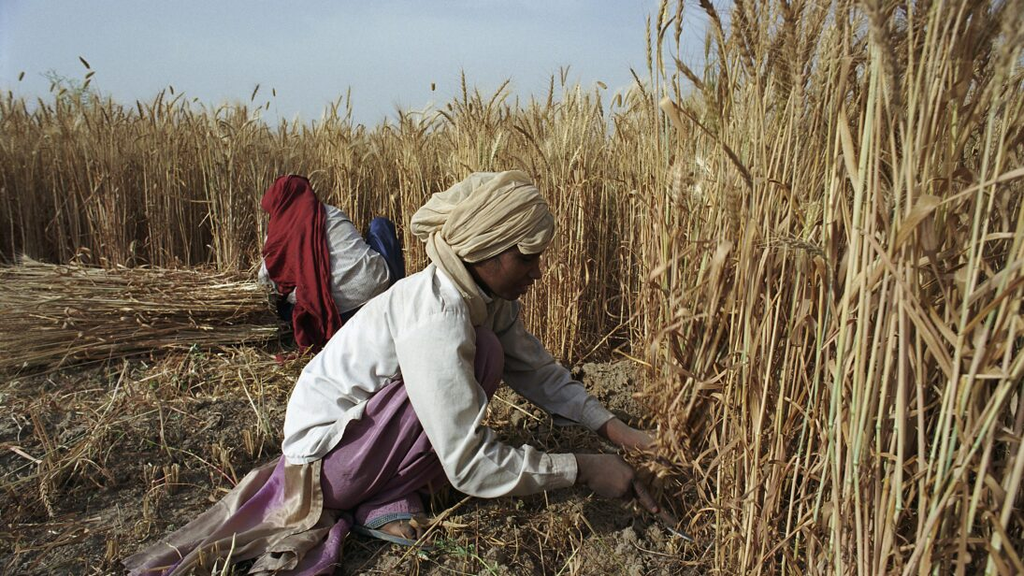
The Indian Rupee recently plunged to a record low of 77.9 against the US Dollar amidst growing uncertainty within domestic equity markets. Two principal factors are directly responsible for this decline in the value of the Indian Rupee. First, the large current account deficit that the Indian economy had incurred over many years. Second, the decrease in Foreign Direct Investment (FDI) due to the flight of investors into safer havens like the United States because of the ongoing war in Ukraine. India has also banned wheat exports citing a risk to its overall security as the war has worsened rising inflation rates.
Economy
This has caused significant concern among international stakeholders: India’s wheat ban has led to a rise in wheat prices by six percent as Ukraine, a leading global breadbasket, is unable to supply the planet with agricultural produce. India “opened” its economy in 1991, taking its first major step toward globalization. The IT and broader service sectors grew consistently, boosting India’s Gross Domestic Product (GDP) and helping the country achieve high growth rates throughout the 1990s and 2000s. However, several challenges weakened the economy, including low real per capita income, high poverty rates, depEcon0myendence on fuel imports, and continued reliance on the unpredictable agrarian sector. These factors collectively became the Achilles’ heel of India’s economy during the late 2010s.
Indian Economy in Crisis
India “opened” its economy in 1991, taking the first step towards globalization. Consistent growth in the Information and Technology (IT) sector and the larger service sector increased India’s Gross Domestic Product (GDP), helping India clock high growth rates throughout the 1990s and 2000s. However, low real per capita income, high poverty rates, and dependence on fuel exports, coupled with continuous dependence on the inconsistent agrarian sector, was the collective Achilles’ heel of India’s economy through the late 2010s.Indian financial institutions have also faced significant pressure during periods of economic slowdown. Banks and other lenders have struggled to recover the capital they have extended to borrowers, which has weakened their financial position.
indian
The growing problem of Non-Performing Assets (NPAs) has placed additional stress on the banking sector. When borrowers fail to repay their loans on time, banks accumulate bad debt, reducing their ability to provide fresh credit to businesses and individuals. The government has therefore had to intervene through various measures aimed at strengthening banks, improving financial stability, and addressing the growing burden of NPAs.
India has the opportunity to reassess its priorities and shift from being a fuel dependent economy to a greener one, reducing its dependence on autocratic states.
Indian financial institutions have also faced significant pressure during periods of economic slowdown. Banks and other lenders have struggled to recover the capital they have extended to borrowers, which has weakened their financial position. The growing problem of Non-Performing Assets (NPAs) has placed additional stress on the banking sector. When borrowers fail to repay their loans on time, banks accumulate bad debt, reducing their ability to provide fresh credit to businesses and individuals. The government has therefore had to intervene through various measures aimed at strengthening banks, improving financial stability, and addressing the growing burden of NPAs.
Although the Indian economy has continued to grow at a relatively high GDP rate, the country’s rising annual fiscal deficit has created serious financial challenges. The government has struggled to translate economic growth into tangible benefits for poorer sections of society. The conventional “trickle-down” effect has failed to distribute the benefits of growth evenly, leaving many low-income households vulnerable to economic uncertainty.